Sunday, November 12, 2017

Friday, September 1, 2017
Genome Identification and Privacy
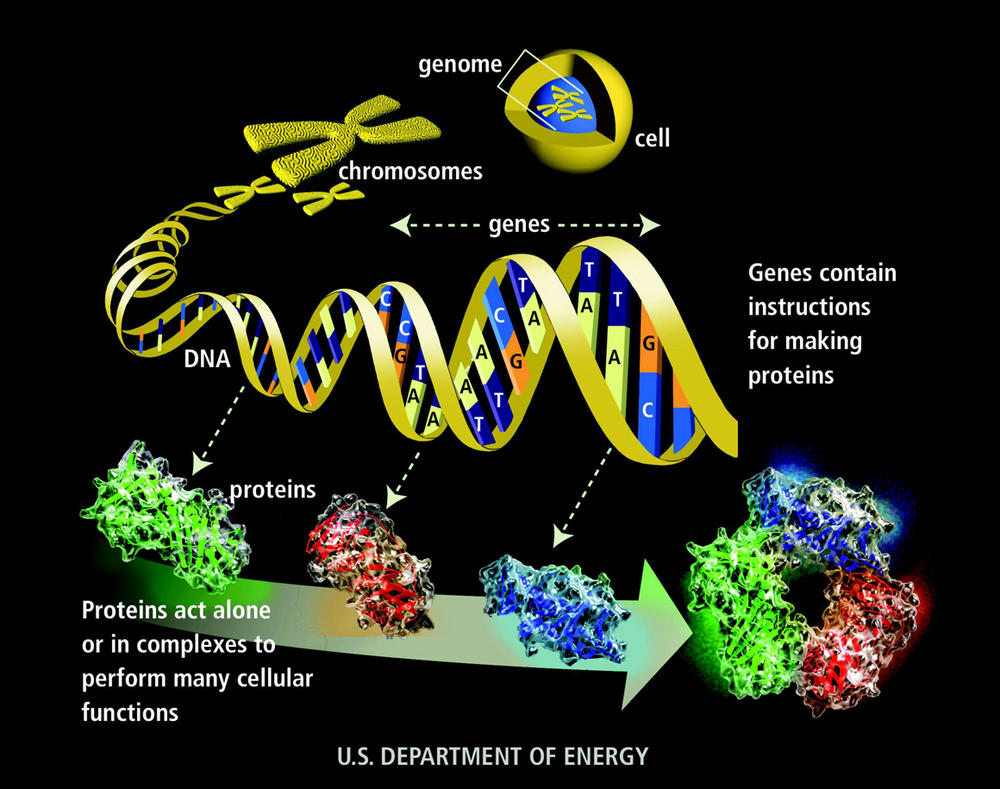 For this assignment, you will listen to CBC's Spark host, Nora Young, interview Dr. Peter Chow-White, an Associate Professor in the School of Communication at Simon Fraser University where he is the Director of the Genomics and Networks Analysis (GeNA) Lab and Associate Director of the Centre for Policy Research on Science and Technology.
 As you listen to the interview, take notes of important points. After you have finished, you will work with a partner to write a formal letter to your Member of Parliament in which you explain your concern about privacy issues regarding DNA testing and the possibility of discriminatory genetic profiling. Explain how genome information is different from electronic health records and the issues related to trust and privacy and the urgent need for Canada to enact legislature similar to the US Genetic Information Nondiscrimination Act (GINA) that is aimed at preventing discrimination for employment or insurance based on your genetic profile.
Refer to page 76 of Access to format your letter using Word and be sure that your name and your partner(s) name(s) are included at the end of the letter.
Click here to listen to the interview
[Back-up link here Start at 33:10 Finish at 42:16]
Find the name and address of your Member of Parliament here . For the purpose of this assignment, use the Constituency Address so that you can practice writing a street address in English.
For this assignment you may use any address (or make one up) for the writer's address, but it must be properly formatted in English. Obviously, if you decide to send your letter to your MP then you must use your own address.
One other link you might find interesting that is discussed in the interview is 23andMe, a commercial venture for DNA testing.
Note: Bill S-201, The Genetic Non-Discrimination Act was introduced in Parliament and was passed by the Senate on April 14, 2016. After this, it was read a second time and referred to the Standing Committee, and as of Dec. 2016 it is in the Report stage. You can read the full text of the bill here, or learn more about the bill's progress here.
Tuesday, August 22, 2017
Martin Luther King: I Have a Dream
As you listen to this speech follow the transcript that is handed out and write in the missing parts. Pay attention to the figurative language used in the speech, including the use of metaphors and compelling parallel structure. Work with your teammates to answer the questions on your handout.
Sunday, August 20, 2017
Beware of Online Filter Bubbles
Before you watch the video, read through the instructions for the report you are going to write so that you can take notes on points you wish to include. You will work with a partner to write your report.
Video: Eli Pariser--Beware of Online Filter Bubbles
algorithm: a logical sequence of steps for solving a problem that can be translated into a computer program
Subject: Effects of the Personalized Web on Democracy (you may modify this to make it appropriate for your report)
Date: Today’s Date
Background Information: Describe your personal use of the internet for social-networking, conducting research, gaming, etc. including the types of tools or sites that you consult most frequently
Findings and Evaluation: Describe changes you have noticed in recent months or years in terms of the information you receive or how features of the sites you use have changed (including ads, pop-ups, links, and so on) and whether these changes affect your access to information.
Recommendation: Conclude your report by stating recommendations you have to assure access to information and different points of view.
Be sure that your name and your partners name are on your report. Single space your report, but use a double space between paragraphs. The full report should be one page and approximately 250 words. Proofread your report carefully for spelling, grammar and wordiness before you print it.
Video: Eli Pariser--Beware of Online Filter Bubbles
algorithm: a logical sequence of steps for solving a problem that can be translated into a computer program
Imagine
that the Canadian Radio-television and Telecommunications Commission (CRTC) has created a task force to examine the effect that “the
personalized web,” (the use of algorithms to personalize the information that
each individual receives) has on education and democracy.
The CRTC would like input from college students for information regarding your experience.
Use
the information that you learned from watching the video and reflect on your
personal experience with social-networking and web-based research. Working with a partner, you will write a
report as a Memorandum. Refer to pages 72 and 73 of Access as a reference.
Set up your report like this:
To: (You may invent
a name), Director, CRTC Task Force
From: (Your Names)Subject: Effects of the Personalized Web on Democracy (you may modify this to make it appropriate for your report)
Date: Today’s Date
Your
report should include the following:
Summary
Statement:
Briefly summarize what the personalized web (filter bubble) is and current
concerns of how this could have an impact on education and/or democracy. Background Information: Describe your personal use of the internet for social-networking, conducting research, gaming, etc. including the types of tools or sites that you consult most frequently
Findings and Evaluation: Describe changes you have noticed in recent months or years in terms of the information you receive or how features of the sites you use have changed (including ads, pop-ups, links, and so on) and whether these changes affect your access to information.
Recommendation: Conclude your report by stating recommendations you have to assure access to information and different points of view.
Be sure that your name and your partners name are on your report. Single space your report, but use a double space between paragraphs. The full report should be one page and approximately 250 words. Proofread your report carefully for spelling, grammar and wordiness before you print it.
Monday, October 31, 2016
Where Good Ideas Come From --Steven Johnson
Steven Johnson speaks about the importance of collaboration for generating great ideas. He begins, not with a personal story, but with a story about the role of the English coffee houses five hundred years ago. See how this story leads to his main point and how he cleverly alludes to the introductory story in his concluding example.
Type your answers in Word and then print them. You may want to copy and paste the questions, but you don't have to. Only the answers to #14 and #15 need to be in complete sentences.
11. What is the slow hunch?
Type your answers in Word and then print them. You may want to copy and paste the questions, but you don't have to. Only the answers to #14 and #15 need to be in complete sentences.
1. How does the English coffeeshop relate to the Enlightenment?
2. What were people drinking in public places around 1650 and why?
3. How did drinking coffee have an impact on the Enlightenment?
4. Name a place Johnson has been investigating to find out where good ideas come from.
5. What is the basic assumption of the concepts of a flash of insight, a stroke of insight, an epiphany, a Eureka moment, etc?
6. What does Johnson say is really happening in your brain and how is it similar to the outside world?
7. What is the traditional problem of expensive neonatal incubators in developing countries?
8. How did the company Design that Matters solve this problem?
9. In what sort of environment did ideas probably come together historically?
10. What is the liquid network?
12. What is wrong with Darwin's explanation of how the idea of natural selection came to him?
13. What is the connection between launching the 1957 Sputnik satellite and today's technology?
14. How do Johnson's concluding remarks enhance his opening story to give his lecture unity?
15. Write a short paragraph in which you give a personal example of the speaker's last line: "Chance favours the connected mind."
If you finish early, improve your vocabulary and donate rice through the United Nations' World Food Program. It's fun, challenging and addictive! Click here
15. Write a short paragraph in which you give a personal example of the speaker's last line: "Chance favours the connected mind."
If you finish early, improve your vocabulary and donate rice through the United Nations' World Food Program. It's fun, challenging and addictive! Click here
Sunday, October 25, 2015
Thursday, September 10, 2015
Wednesday, September 2, 2015
Ghana: Digital Dumping Ground
Agbogloshie is a city near Accra, the capital of Ghana in West Africa. This city, which was once a beautiful wetland that attracted small wildlife, abundant birdlife and a various species of fish. Over the last 15 years, this sanctuary that used to attract bird watchers and naturalists, has become one of the world's largest dumping grounds of electronic waste. E-waste from industrialized countries is being smuggled into Ghana supposedly as a charitable donation labeled "secondhand re-usable goods" when, in reality, the items are not usable and beyond repair. The video, Ghana: Digital Dumping Ground, was created by Peter Klein, a journalist, teacher and filmmaker, and graduate journalism students at the University of British Columbia in 2009. You canwatch the video on the PBS website Frontline World: Ghana: Digital Dumping Ground
The website also has a link to a slideshow of photos: Slideshow of "Sodom and Gomorrah"
Has the situation improved since 2009? This article from December 2013 reports that Agbogbloshie has become the world's second largest e-waste dump. The post, The Fate of Electronic Waste is from The Wall Street Journal blog Photo Journal, dated July 7, 2015.Ghana: Digital Dumping Ground US News & World Report has an article from August 2, 2014 entitled E-Waste in Developing Countries Endangers Environment, Locals
To learn more about the challenges of recycling electronics, read the article Not Designed for Recycling and Green Chemistry vs Toxic Technology by the Electronics TakeBack Coalition. Also check out Buy Greener Electronics (note the word "greener" because "green electronics" don't really exist....yet.
The website also has a link to a slideshow of photos: Slideshow of "Sodom and Gomorrah"
Has the situation improved since 2009? This article from December 2013 reports that Agbogbloshie has become the world's second largest e-waste dump. The post, The Fate of Electronic Waste is from The Wall Street Journal blog Photo Journal, dated July 7, 2015.Ghana: Digital Dumping Ground US News & World Report has an article from August 2, 2014 entitled E-Waste in Developing Countries Endangers Environment, Locals
To learn more about the challenges of recycling electronics, read the article Not Designed for Recycling and Green Chemistry vs Toxic Technology by the Electronics TakeBack Coalition. Also check out Buy Greener Electronics (note the word "greener" because "green electronics" don't really exist....yet.
Saturday, August 1, 2015
 An advertiser's job is to interest you in a product, and hopefully, persuade you to buy it. Watch the following ads and reflect on how successful the ad is at delivering a message.
 Consider the following questions:
1. Does the ad tell a story? If so, what is the basic structure?
2. What is the tone of the ad—is it humourous, playful, serious, informative, etc?
3. Who was the message intended for? Who is the target audience?
4. What techniques are used to persuade or inform me?
5. What is the overt message? Is there also an embedded message?
6. What values, lifestyles and points of view are represented in the message?
7. Are printed words used in the ad? What effect do they have?
8. Does the commercial succeed in delivering the message? Do you feel inspired to act?
Volvo Trucks (Sweden)
KMart Ship My Pants (US)
Molson Beer (Canada)
Evian Water (France)
Why are some ads more successful than others? Take a look at a short video called How to Write a Boring Ad that makes fun of traditional commercials.
Wednesday, July 1, 2015
Digitally Embedded Ads
Here is SeamBI's gallery of brand integration as you read about in the article on digital integration.
Is this the latest ad trend? Another approach that has been attracting a lot of interest and curiosity, is the notion of prankvertising where the advertisers devise a prank and film real live people experiencing the unexpected, film it and upload it on YouTube and then watch it go viral. While setting up the prank is expensive, the company saves by not paying for ad space.
Is this the latest ad trend? Another approach that has been attracting a lot of interest and curiosity, is the notion of prankvertising where the advertisers devise a prank and film real live people experiencing the unexpected, film it and upload it on YouTube and then watch it go viral. While setting up the prank is expensive, the company saves by not paying for ad space.
Monday, December 1, 2014
Wednesday, January 22, 2014
Survey on Electronic Books and Devices
I would like to know a little bit about your access and use of electronic devices and e-books. Please click on the link for your class:
CED students Click here to take survey
CEB students Click here to take survey
CED students Click here to take survey
CEB students Click here to take survey
Sunday, February 24, 2013
Rosa Parks, the Outlier
This year is the 100th anniversary of Rosa Parks' birth. She is often referred to as an unlikely hero of civil rights, but as you will learn in this video, this is not quite the case. Use what you have learned from reading Outliers to explain the factors that led to her becoming a symbol of the civil rights movement and how her modest act of refusing to give up a seat on a bus led to major changes in American segregation laws.
Take brief notes as you watch the video and then work with a partner to write a 250-word description of the elements that contributed to Rosa Parks' remarkable story while making references to Malcolm Gladwell's observations about outliers.
This year is the 100th anniversary of Rosa Parks' birth. She is often referred to as an unlikely hero of civil rights, but as you will learn in this video, this is not quite the case. Use what you have learned from reading Outliers to explain the factors that led to her becoming a symbol of the civil rights movement and how her modest act of refusing to give up a seat on a bus led to major changes in American segregation laws.
Take brief notes as you watch the video and then work with a partner to write a 250-word description of the elements that contributed to Rosa Parks' remarkable story while making references to Malcolm Gladwell's observations about outliers.
Tuesday, January 29, 2013
Level of Language: Lemon Anderson Performs "Please Don't Take My Air Jordans"
How would you describe the level of language (register) of this performance?
What do you think "Subordination for verbal measures to tonal consideration" means? Why is this remark so humourous? If you have not yet answered the survey, Longueuil students please click here and ENA students click here
What do you think "Subordination for verbal measures to tonal consideration" means? Why is this remark so humourous? If you have not yet answered the survey, Longueuil students please click here and ENA students click here
Tuesday, January 1, 2013
Filter Bubbles and Technology Refusal
Read the questions after the video and audio recordings then watch the video and listen to the audio recording. Be able to discuss the questions with a partner or with the class.
Video: Eli Pariser--Beware of Online Filter Bubbles
Questions:
1. After watching the video, explain the relationship between the filter bubble and Mark Zuckerberg's comment that "a squirrel dying in your backyard may be more rlelevant to your interests right now than people dying in Africa."
2. Explain how Pariser first noticed the effects of personalization on the web.
3. Explain the danger algorithmic editing can have on democracy.
4. What are some of the companies mentioned in the video that use personalization?
5. Who were the traditional "gatekeepers" and how is that different from what is happening on the web today?
6. Explain the request Pariser making to people such as Google's founders Larry Page and Sergey Brin.
Listening: Refusing Facebook Has Social Cost
 Right click the picture and to open the link in a new window and then click on the Audio file to listen to the discussion between Nora Young and Alice Marwick (or read the summarized article if there is not enough time to listen to the entire interview)
1. What is "technology refusal"? What is your experience?
2. What are the costs of opting out of technology?
3. Explain the business model of "free" social-networking sites.
4. How does the speed of new technology affect the decision to opt out?
5. What role does age seem to play in opting out of technology?
6. Where is most social-networking technology created and how does this affect people in other parts of the world?
Michael Agger talks about Nicholas Carr's book The Shallows and how the internet is changing the way we think and process information in this article: The Internet Diet
Mitch Joel writes about What You Always Need to Remember About the Internet
Cynthia Reynolds' article in Macleans Magazine on Why Your Teenager Can't Use a Hammer
1. After watching the video, explain the relationship between the filter bubble and Mark Zuckerberg's comment that "a squirrel dying in your backyard may be more rlelevant to your interests right now than people dying in Africa."
2. Explain how Pariser first noticed the effects of personalization on the web.
3. Explain the danger algorithmic editing can have on democracy.
4. What are some of the companies mentioned in the video that use personalization?
5. Who were the traditional "gatekeepers" and how is that different from what is happening on the web today?
6. Explain the request Pariser making to people such as Google's founders Larry Page and Sergey Brin.
2. What are the costs of opting out of technology?
3. Explain the business model of "free" social-networking sites.
4. How does the speed of new technology affect the decision to opt out?
5. What role does age seem to play in opting out of technology?
6. Where is most social-networking technology created and how does this affect people in other parts of the world?
More articles to reflect on regarding the internet and social media:
Nick Harding's anthropological insight on the Science of the Social Network
Michael Agger talks about Nicholas Carr's book The Shallows and how the internet is changing the way we think and process information in this article: The Internet Diet
Mitch Joel writes about What You Always Need to Remember About the Internet
Cynthia Reynolds' article in Macleans Magazine on Why Your Teenager Can't Use a Hammer
Saturday, November 24, 2012
Alain de Botton: A Kinder, Gentler Philosophy of Success
Compare Alain de Botton's view of success with the ideas you have read about in Outliers.
Saturday, November 17, 2012
Saturday, November 10, 2012
Will Facebook Own You?
Check out this article about Facebook's new strategy to embed all of your "intrawebs" on Facebook rather than just including links that send you elsewhere?
The article concludes with this statement:
This is the true risk of entrusting your entire online (and by association, offline) persona with a single entity — and yes, you should be worried that, as it stands, there is nothing in the way of either Google or Facebook becoming a cyberpunkish Megacorporation.
Are you worried?
The article concludes with this statement:
This is the true risk of entrusting your entire online (and by association, offline) persona with a single entity — and yes, you should be worried that, as it stands, there is nothing in the way of either Google or Facebook becoming a cyberpunkish Megacorporation.
Are you worried?
Saturday, September 1, 2012
2. What are the costs of opting out of technology?
3. Explain the business model of "free" social-networking sites.
4. How does the speed of new technology affect the decision to opt out?
5. What role does age seem to play in opting out of technology?
6. Where is most social-networking technology created and how does this affect people in other parts of the world?
More articles to reflect on regarding the internet and social media:
Nick Harding's anthropological insight on the Science of the Social Network
Michael Agger talks about Nicholas Carr's book The Shallows and how the internet is changing the way we think and process information in this article: The Internet Diet
Mitch Joel writes about What You Always Need to Remember About the Internet
Cynthia Reynolds' article in Macleans Magazine on Why Your Teenager Can't Use a Hammer
Subscribe to:
Posts (Atom)